Insurance and Safety
 At our organisation, insurance and safety are more than compliance requirements; they are fundamental to how we operate every day. We take a proactive approach to protecting people, property, and the public by combining robust public liability insurance with practical workplace controls. This commitment helps us manage incidents responsibly, reduce risk exposure, and maintain confidence in the services we deliver.
Our insurance and safety policy is built around prevention, preparation, and accountability. Every activity is considered through the lens of risk, whether it involves equipment, movement of materials, customer interaction, or site access. By embedding safety into daily routines, we create a culture where employees understand their responsibilities and managers can make informed decisions that support a safe working environment.
 We also recognise that no two tasks carry the same level of risk, which is why our liability protection is supported by clear procedures and regular reviews. Public liability insurance is an essential safeguard because it provides protection should an incident involving third parties occur. Alongside this, our team remains focused on preventing accidents through careful planning, sensible work methods, and ongoing supervision.
One of the cornerstones of our health and safety framework is staff training. New employees receive induction training that introduces core safe-working principles, emergency procedures, and role-specific requirements. Refresher sessions are then delivered periodically to keep knowledge current and reinforce good habits. This training ensures that safety is not treated as a one-time lesson but as a continuous part of working practice.
Our training programme covers a broad range of topics, including safe manual handling, correct equipment use, hazard awareness, emergency response, and reporting procedures. Supervisors also receive additional instruction so they can identify issues early and support team members effectively. By investing in training, we strengthen competency across the business and reduce the likelihood of avoidable incidents.
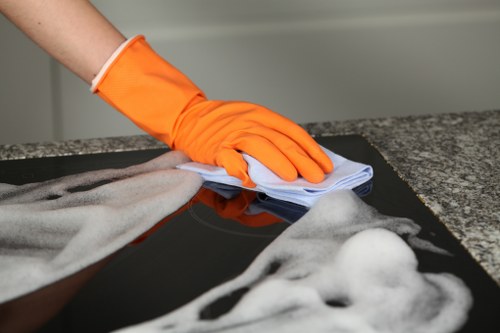 PPE is another essential layer of protection within our safety and insurance approach. Depending on the task, personal protective equipment may include safety footwear, gloves, high-visibility clothing, eye protection, hearing protection, or respiratory equipment. PPE is issued based on the nature of the work and the assessed risks involved. Staff are trained not only in how to wear PPE correctly but also in how to inspect, clean, and store it so that it remains effective.
The use of PPE is never a substitute for good planning, but it significantly reduces exposure when hazards cannot be fully removed. We ensure that protective equipment is suitable for the task, properly maintained, and replaced when necessary. Employees are expected to report damaged or worn items promptly, and managers monitor compliance as part of routine site oversight. This practical attention to detail helps maintain consistent standards of protection.
Our risk assessment process is designed to identify hazards before they lead to harm. Each assessment begins by examining the task, location, equipment, and people involved. Potential risks are then evaluated according to likelihood and severity, allowing us to prioritise the most significant concerns. From there, control measures are selected using a sensible hierarchy: eliminate the hazard where possible, substitute safer methods when available, apply engineering or administrative controls, and use PPE as the final line of defence.
Risk assessments are reviewed whenever circumstances change, such as introducing new equipment, altering work methods, or moving to a different environment. They are also revisited after incidents or near misses so we can learn from experience and improve our controls. This ongoing process keeps our insurance and safety management responsive and relevant, ensuring that our procedures reflect real working conditions rather than assumptions.
 A strong safety culture depends on everyone understanding that prevention is a shared responsibility. Employees are encouraged to speak up if they notice hazards, unsafe practices, or equipment concerns. Managers, in turn, are expected to respond quickly, document findings, and implement corrective actions. This open approach supports continuous improvement and demonstrates that workplace safety is taken seriously at every level.
Public liability insurance plays an important role in the broader framework, but it works best when paired with effective risk control. By maintaining safe systems of work, providing suitable training, and keeping PPE available and in good condition, we reduce the chance of claims and, more importantly, protect the wellbeing of everyone affected by our activities. This balance between prevention and protection is central to our operating philosophy.
 In practice, our commitment to insurance and safety means that every job is approached with careful thought, clear accountability, and a focus on safe outcomes. From the initial risk assessment to the final use of PPE, each step is designed to minimise harm and uphold professional standards. Through public liability cover, staff training, personal protective equipment, and a disciplined assessment process, we create a safer environment for employees, visitors, and the public alike.